
Riverhead Address Records Through the Eras
Earlier Riverhead households leave different kinds of evidence in different periods. A current Riverhead tax or assessment entry fixes the parcel and a recent time frame. Recorded Riverhead deeds establish transfers, but not who occupied a place. Riverhead directories and newspapers can offer household clues, while Riverhead atlases and maps place a building on a block. Treat each source as a separate statement and keep its date beside the fact it supports. The Riverhead table below is a practical starting order when tracing earlier households, rather than only who held title.
| Riverhead source | Years available | Where held | What it can establish |
|---|---|---|---|
| Riverhead Town final assessment rolls and tax search | Riverhead roll archive from 2010–11; online tax data from December 2017 | Town of Riverhead archive and tax portal | Riverhead property location, class, assessment, exemptions, and tax-year context |
| Suffolk County Riverhead deeds and mortgages | Riverhead land records reach the mid-1600s; terminals cover 1969 forward | Riverhead County Clerk kiosk and Historic Documents Library | Recorded parties, legal description, prior reference, and instrument dates |
| Curtin’s Riverhead directory | 1868/69 | Digitized page and Riverhead local-history institutions | Name, role, home or business intersection, and Riverhead landmarks |
| Riverhead atlases, Sanborn material, and permits | Riverhead atlases begin about 1873; permits generally begin in the early 1920s | County historic collections, Library of Congress, and Riverhead Town records | Riverhead building footprint, map context, permits, and date clues |
The Suffolk County Clerk Historic Documents Library is the key Riverhead fallback when a chain moves beyond the digital window.
Riverhead researchers should expect older material to require a records-room visit, rather than assuming a missing web image means the trail has ended.
Riverhead Parcels and Earlier Households
Begin a Riverhead address search by fixing the parcel, not by interpreting a repeated surname. The Riverhead Town tax search accepts a bill number, tax-map number, or property address. Its address instructions say to omit a street, road, or lane suffix. The Riverhead County Clerk tax-map finder uses house number, street name, and ZIP to return candidates that include district, section, block, and lot. That DSBL identifier gives the Riverhead address a stable map reference when street wording has changed.
Use the Riverhead Town tax search, the Riverhead RPTSA Tax Map Division, and the Riverhead County Clerk result together. A tax roll can show a named party and a property location, but it does not prove present occupancy or replace the recorded deed. Note the printed Riverhead address, DSBL, roll year, and source before moving backward.
- DSBL
- District, section, block, and lot: the County’s tax-map identifier for a parcel.
- Situs address
- The physical property location used for mapping and assessment. It can differ from an address used for tax correspondence.
- Assessment roll
- A year-specific Town record of property location, class, assessment, exemptions, and taxing columns. It is not a deed.
Note: Riverhead postal labels and hamlet names can cross jurisdictional lines, so the parcel identifier and record custodian matter more than a ZIP alone.
Riverhead Deed Records Through Time
A Suffolk County deed chain follows transfers from the present instrument toward earlier ones. In the Riverhead County Clerk kiosk, a property route can use the tax-map identity, and the name route supports surname or corporation, optional first name and suffix, a date range, and Starts With, Contains, or Exact choices. Capture both the instrument date and recording date. They can differ. Also record the Liber and page or document number, legal description, map reference, and prior deed reference before opening the next Riverhead link.
- Use the Riverhead parcel and the most recent instrument to record the grantee, grantor, deed type, recording details, and legal description.
- Search the seller as a grantee to locate that party’s earlier acquisition, then compare the parcel or legal description instead of relying on the name alone.
- Repeat through each prior reference. Search both grantor and grantee sides, including initials, spelling variants, corporate names, and DBAs where the record calls for it.
- When the digital result is only an index row or the chain reaches older books, take the Liber and page to the Historic Documents Library.
- Grantor and grantee
- The grantor conveys an interest; the grantee receives it. Each side of the index answers a different step in the chain.
- Chain of title
- A documented sequence of recorded transfers for the same parcel or legal description, not a list of people who occupied it.
- Legal description
- The parcel language in a recorded instrument, such as metes and bounds or a filed-map lot. It can remain useful when a street address changes.
The County Clerk copies route explains how to request a deed or mortgage copy when the right document has been identified.
For Riverhead address history, an official copy is stronger evidence than a search-result label, and any listed copy fee should be rechecked before ordering.
Riverhead Paper Land Records
Riverhead land research changes form as the chain reaches older records. The County guide directs researchers to terminals for 1969 forward. Before 1969, it directs them to large grantor and grantee books. The 1660–1950 materials are one alphabetic Suffolk County set, while 1951–1969 books are divided by town. Grantors and grantees are on opposite sides. Ask an archivist for the earliest grantee books rather than guessing which sequence applies.
This is an important Riverhead records-geography detail. The historic books are county records, even when the property is in the Town of Riverhead. A paper-only Riverhead volume, a hard-to-read Mylar map, or an unavailable image is a documented access gap, not permission to fill the missing link with a guess. The Riverhead historic guide suggests allowing a full day and notes that researchers should complete their visit before closing procedures begin.
The FamilySearch New York land-record collection can supply a statewide archival route alongside the County’s local books.
Riverhead results from an archival collection should still be reconciled with the County Clerk book, image, or copy route that holds the recorded instrument.
Riverhead Household Records in Directories
Deeds answer a title question. Earlier households are more often suggested by historical directories, newspapers, obituaries, and census material. Curtin’s 1868/69 Riverhead directory is especially useful because it can give a person’s name, a description, and a home or business intersection. Its intersections are not modern street numbers. Preserve the exact wording, including abbreviations, then compare it with a map, deed, or later source.
- Find the Riverhead address, old street name, intersection, landmark, or name in a dated directory or newspaper resource.
- Record the edition date and each source spelling, then place it beside the appropriate census year without treating the two sources as interchangeable.
- Compare the household lead with the parcel trail, a map, and a newspaper or probate source. Mark it as a lead until two independent records align.
Riverhead Free Library offers a Riverhead local-history collection, newspaper resources, and free one-hour genealogy appointments on Tuesdays and Wednesdays. The Riverhead historical shelf is described on the Riverhead Directory Book, where collection limits and the 1868/69 entry style are kept separate from the deed chain.
The New York State Archives genealogy route provides additional paths for land, court, vital, and related historical research.
Riverhead household evidence gains weight when its date, place, and source spelling match the parcel and deed record rather than merely sharing a surname.
Riverhead Former Streets and Addresses
Riverhead previous-resident research can fail if an old street label is silently converted to a modern one. The Town history material says that Cemetery Street became Pulaski Street through a Town Board resolution dated October 9, 1929. Search both names in deeds, directories, newspapers, maps, and Town records. The older Curtin directory may use an intersection or landmark instead of a house number, so it should not be forced into a present address without independent support.
Historic atlases beginning about 1873 and the Riverhead 1897 Sanborn target can add building and block context. Sanborn material records such things as outlines, construction symbols, stories, and use. It does not name every person at a location. The Library of Congress Sanborn collection, County Clerk holdings, and the SUNY Stony Brook microfilm route are distinct access channels and should not be merged into one claim.
Note: A Riverhead intersection, a map footprint, and a later street number may describe the same place, but only a documented reconciliation should join them.
Riverhead Records at Trail Endpoints
When a Riverhead deed names an heir, the County historic guide recommends a Suffolk Surrogate’s Court will search because a will may describe property or family connections more fully than the deed. Mortgages may add a construction-date clue, while early permits may include an applicant-provided date of origin. Keep those date types distinct. A probate file, certificate index, or obituary can clarify an event, but none alone proves the full history of a Riverhead address.
For qualifying historical research, use the New York State Archives vital-record guidance and the appropriate certificate rules. Modern records have access limits based on age, relationship, proof, or court order. The Town Clerk is the local route for Riverhead-issued certificates, while state and archival indexes have separate procedures.
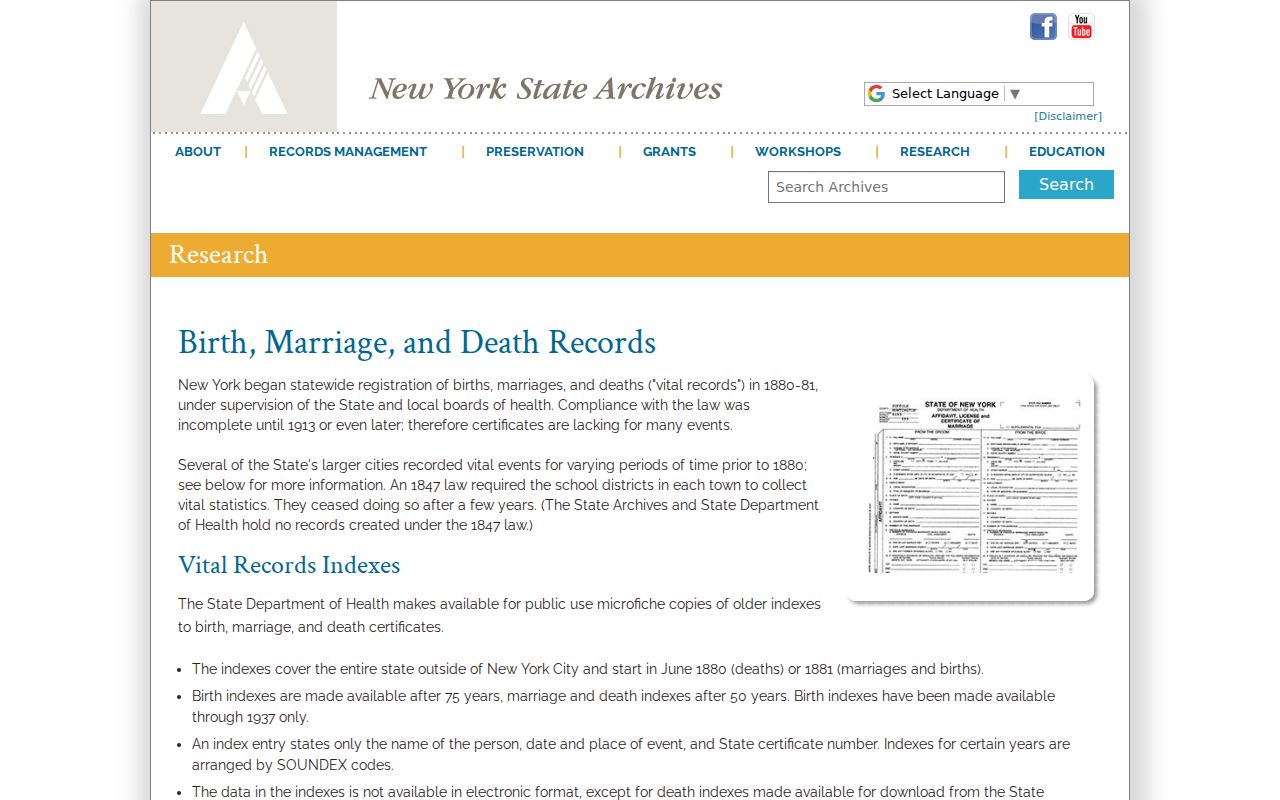
Riverhead family-history research is strongest when an index is treated as a lead and the lawful custodian route is used for any record that needs confirmation.
Riverhead Address Records and Gaps
Gaps are part of the Riverhead record trail. Riverhead County Clerk imaging has a documented coverage discrepancy: one official source describes 1987 forward, while budget material says 1986 forward. Older Riverhead deeds remain a paper route. The Town Historian also recounts a 1909 kerosene accident that nearly destroyed official records. These Riverhead conditions explain why a careful trail may contain a dated gap, a volume request, or an unresolved name rather than a single clean answer.
Keep a simple Riverhead research log with the exact address or DSBL, source spelling, date type, custodian, document reference, and confidence level. State what each record proves and what it does not. That makes later corrections possible and prevents a tax owner, deed party, or directory line from being presented as proof that someone lived at the address.
Lawful personal research. Riverhead house and family history can be useful for genealogy, estate questions, and neighborhood context. Do not use a record trail to monitor, threaten, repeatedly contact, or expose a living person.