
Finding Riverhead Resident Records
Riverhead does not have one complete public list of people. The useful record depends on the question. An address can lead to a Town tax entry, a County tax-map identifier, and then a recorded instrument. A name can be checked against a deed index, a court search, or a historical directory, but it needs a second fact before it becomes a reliable lead. Use a date, street, parcel, case number, or historic intersection to separate people with the same name. The Riverhead residents directory is strongest when it treats each result as evidence with a custodian and a date.
Start with the source closest to the fact at issue. The Town’s tax material is a location and assessment source. The Suffolk County Clerk records deeds and other instruments. The Riverhead Free Library and Suffolk County Historical Society are better places to pursue an older household, obituary, directory, or map clue. A roll can show a recorded relationship to an address without proving that a person lives there now. That distinction keeps a Riverhead residents directory useful and fair.
- Write down the complete street address, a known name, or the date range that matters.
- Check the Town tax search or County Clerk tax-map finder for the parcel and its DSBL identifier.
- Use the County Clerk name or tax-map route for the relevant deed or recorded instrument.
- For an older Riverhead household, compare the 1868/69 directory, newspapers, maps, and local-history help.
- When an online index stops, ask the specific custodian for inspection, a copy route, or a reasonably described FOIL request.
Note: Keep the search date and the source’s stated coverage period with every result, because Riverhead indexes and rolls refresh on different schedules.
Riverhead Records Office Routes
Three offices answer most current-record questions in the Riverhead residents directory, but they are not interchangeable. The Town Assessor handles local assessment, exemptions, transfer-related work, and local roll timing. Suffolk County’s RPTSA handles tax maps, DSBL structure, verification, and owner-index functions. The County Clerk is the recorded-instrument custodian for deeds, mortgages, liens, filed maps, and historic books. The County Board of Elections, based in Yaphank, is the separate voter-record custodian. For a full address-first sequence, use the Riverhead street directory route.
Suffolk County Clerk
County Center
300 Center Drive, Riverhead, NY 11901
631-852-2000
Town of Riverhead Assessor
Town Hall
4 West Second Street, Riverhead, NY 11901
631-727-3200, extensions 255/257/258
Suffolk County Board of Elections
Yaphank Avenue, P.O. Box 700
Yaphank, NY 11980
631-852-4500
Riverhead Tax Search Fields
The Town tax search offers three separate starting points: bill number, tax-map number, or property address. Choose one route, then use the collection selector when an earlier collection is available. The address instructions are unusually specific: enter the street name without its street, road, or lane suffix. Online material begins in December 2017 and reaches the current collection year. The Town calls it a public courtesy service, not a certified record, so use it to locate a parcel and then verify an important ownership question with the proper custodian.
| Town tax field | How it is used | Riverhead caution |
|---|---|---|
| Bill number | Find one tax bill | Use the record year shown by the selected collection. |
| Tax Map number | Find a mapped property | Enter the section-block-lot format with hyphens and no spaces. |
| Property address | Locate a street address | Omit the address suffix as the Town instructs. |
| Collection selector | Switch tax years | It does not promise a complete historic title history. |
The tax screen is a good first stop for a Riverhead residents directory search because it identifies the property trail. It should not be read as a current-occupant list. The Town archive also lists final assessment-roll PDFs from 2010–11 through 2025–26, giving a dated snapshot of property location, classification, assessment, exemptions, and county, Town, and school columns.
See the Town tax-search interface at the official Riverhead tax portal.
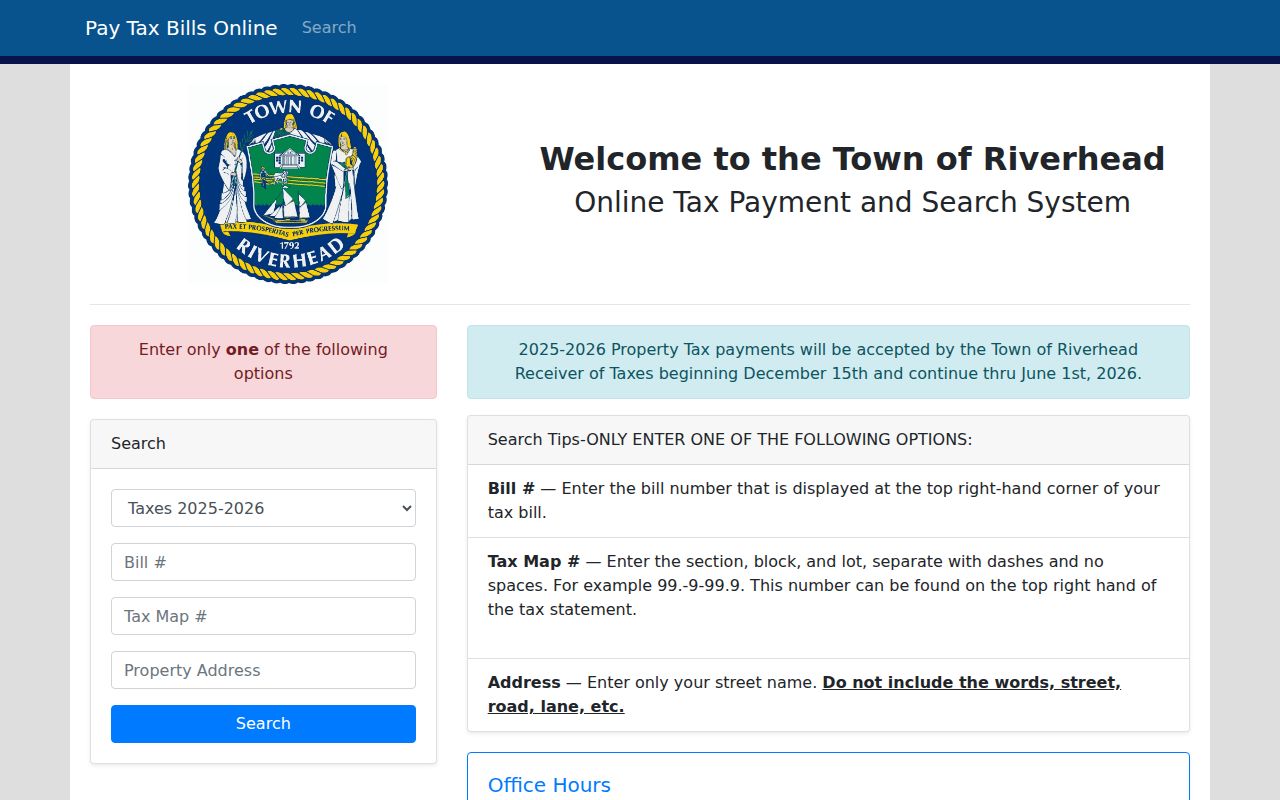
Those fields turn a street address or parcel reference into a record trail, rather than a claim about who currently occupies a home.
Riverhead Deed Index Trail
The Suffolk County Clerk kiosk supplies the recorded-document path. Its tax-map finder uses house number, street name, and ZIP to find a tax-map candidate. Its name-records route accepts a last name or corporation, optional first name and suffix, date limits, and Starts With, Contains, or Exact matching. A Tax Map Search can reach deeds, mortgages, liens, notices of pendency, and judgments by property tax-map ID. Judgments and liens should also be searched by name, as the Clerk advises.
For a Riverhead residents directory search, an index row is not the same as a deed image. It may display names, address lines, city, state, ZIP, district, section, block, lot, and document controls. Read the actual instrument or use the copy route when the question concerns grantor, grantee, recording date, legal description, prior reference, or title language. The Clerk’s online land-record imaging is stated as 1987 forward in its programs material, while the Historic Documents Library supplies a paper route for older records reaching the mid-1600s.
The kiosk’s tax-map and name-search screen is the starting point for recorded-instrument work.
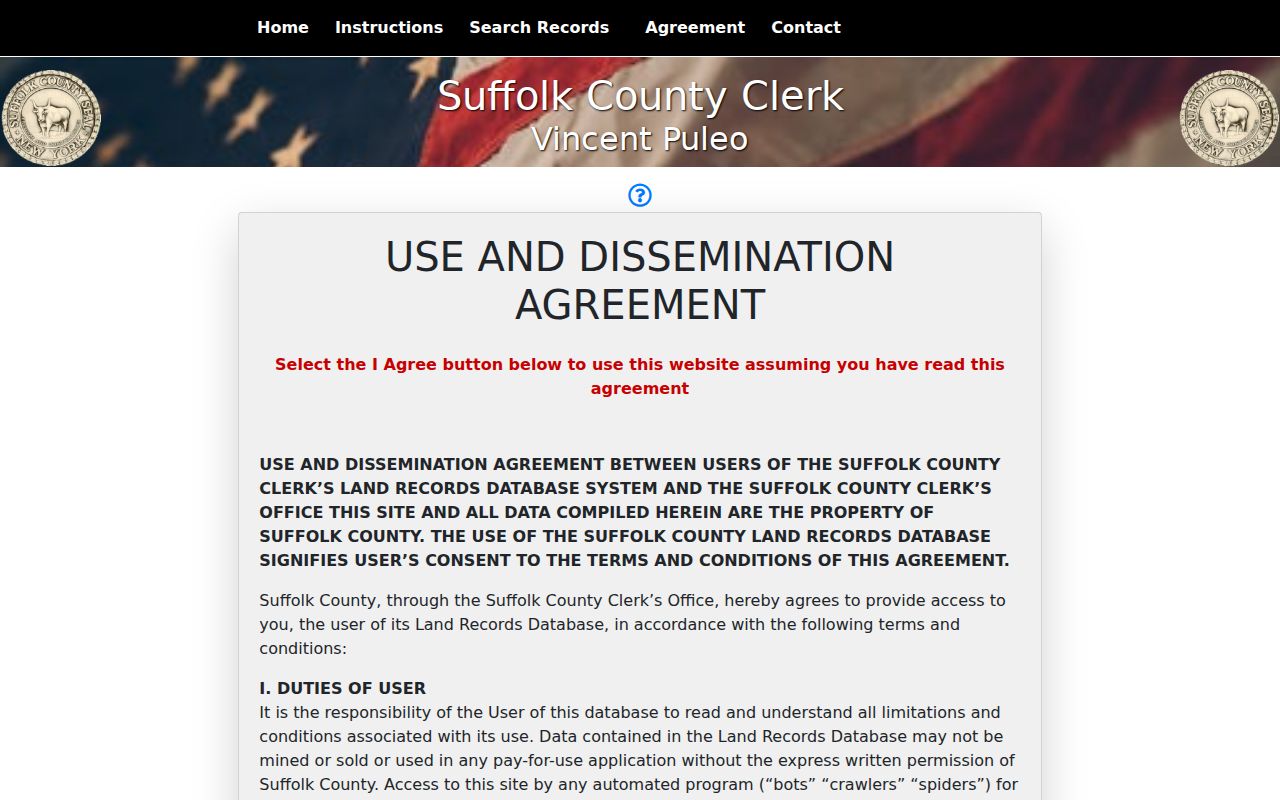
A result can narrow the next request, but image availability and any purchase control vary by record type and session.
- Parcel
- A mapped piece of land used for assessment and tax administration.
- DSBL
- District, section, block, and lot, Suffolk County’s parcel identifier structure.
- Index
- A finding tool that points to a record; it does not always include the document image.
- Criss-cross directory
- An address-to-name directory, if a confirmed local volume is available.
Note: A recorded owner, a tax-bill recipient, and a current occupant are different record roles and should never be silently merged.
Riverhead Town Clerk Records
The Town Clerk is the municipal records hub. Its published responsibilities include Town Board minutes and resolutions, fire-district information, vital certificates, licenses, permits, and meeting notices. Use a person’s name as a lead only when it is paired with a date, address, meeting, license, or record category. A municipal mention may establish participation in a record, not residence. The Town archive’s advanced search takes keywords, archive category, date-from, and date-to, so it is not a universal name index.
Copies of permits, certificates of occupancy, and surveys follow the Town’s FOIL routing through the Clerk. A good request identifies the creating department, parcel or address, record type, date range, and whether inspection or a copy is wanted. That bounded request is more useful than asking for every item connected to a person. The Clerk is at 4 West Second Street in Riverhead and lists weekday hours of 8:30 a.m. to 4:30 p.m.
The Town Clerk page identifies the municipal record categories and contact route.
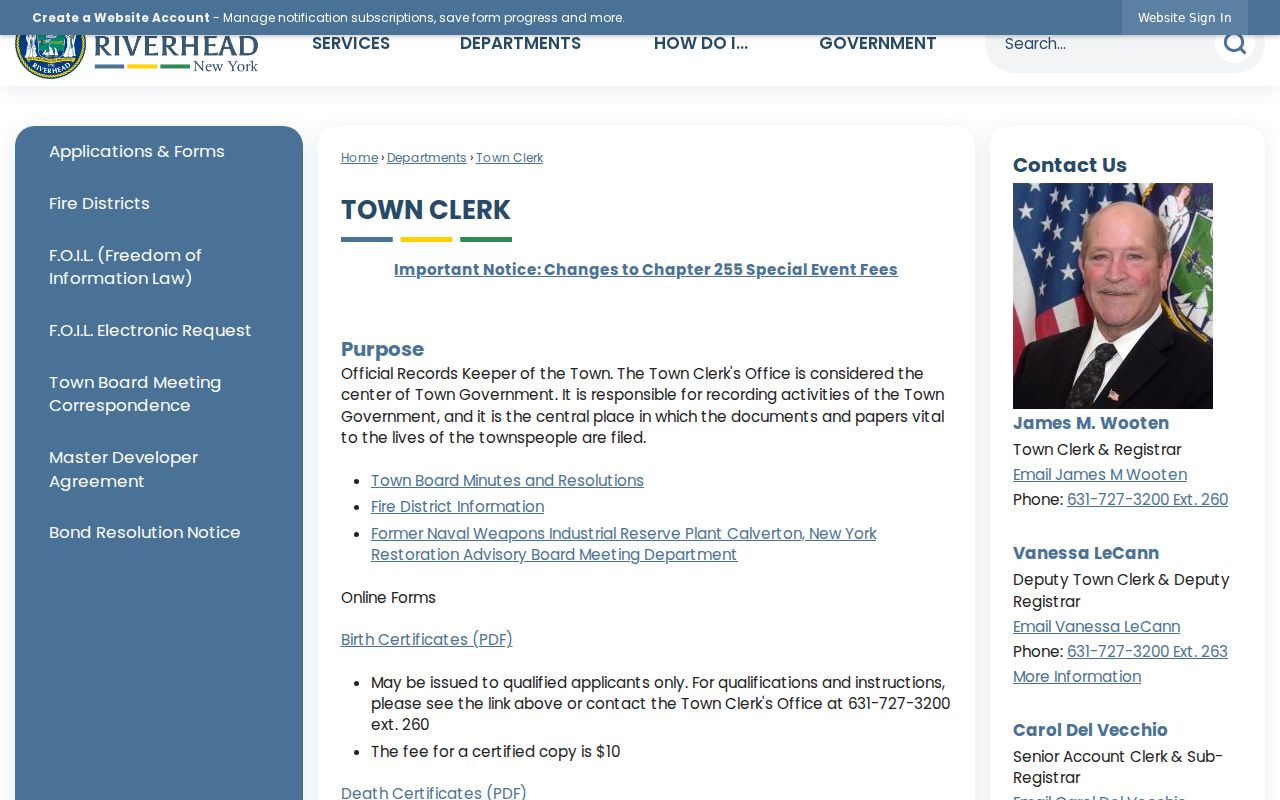
Use the office route to request an existing municipal record, not to assume that a Town page contains a complete resident list.
Riverhead Assessment Roll Snapshot
Assessment records answer a narrower question than a deed. The final-roll sample lists property location, classification, assessment, exemptions, and separate county, Town, and school columns. That makes a roll helpful for matching a place and a tax year. It does not establish a complete title chain or current occupancy. The Town Assessor also handles valuation, exemptions, transfer-related work, parcel split or merge effects from filed maps, and assessment timing.
County RPTSA is the stronger route for DSBL structure, tax-map work, document verification, and owner-index context. The County Clerk is the better custodian for recorded instruments. Keeping those roles separate is an important Riverhead-specific comparison: Town tax data answers an assessment question, county mapping answers a parcel question, and the deed record answers a recorded-title question.
Riverhead Voter Lookup Limits
The official New York voter lookup asks for last name, first name, date of birth, county, and address information. Its stated purpose is voter-facing status, poll-site, and mail-ballot information. It is not a general resident list. Suffolk County Board of Elections keeps the county voter records in Yaphank, and a failed public lookup can reflect a mismatch, a coverage limit, or confidential registration rather than proof about a person.
New York’s voter-data rules add important limits. A hard-copy voter list is available only under statutory conditions, and statewide or multidistrict data requests use the Board of Elections FOIL route with an elections-purpose statement. Signature images are restricted. Eligible safety-risk voters can use confidential registration under Election Law §5-508. A Riverhead residents directory should direct people to the official process while minimizing sensitive information.
Review the match fields on the official voter lookup before using the service for a personal registration task.
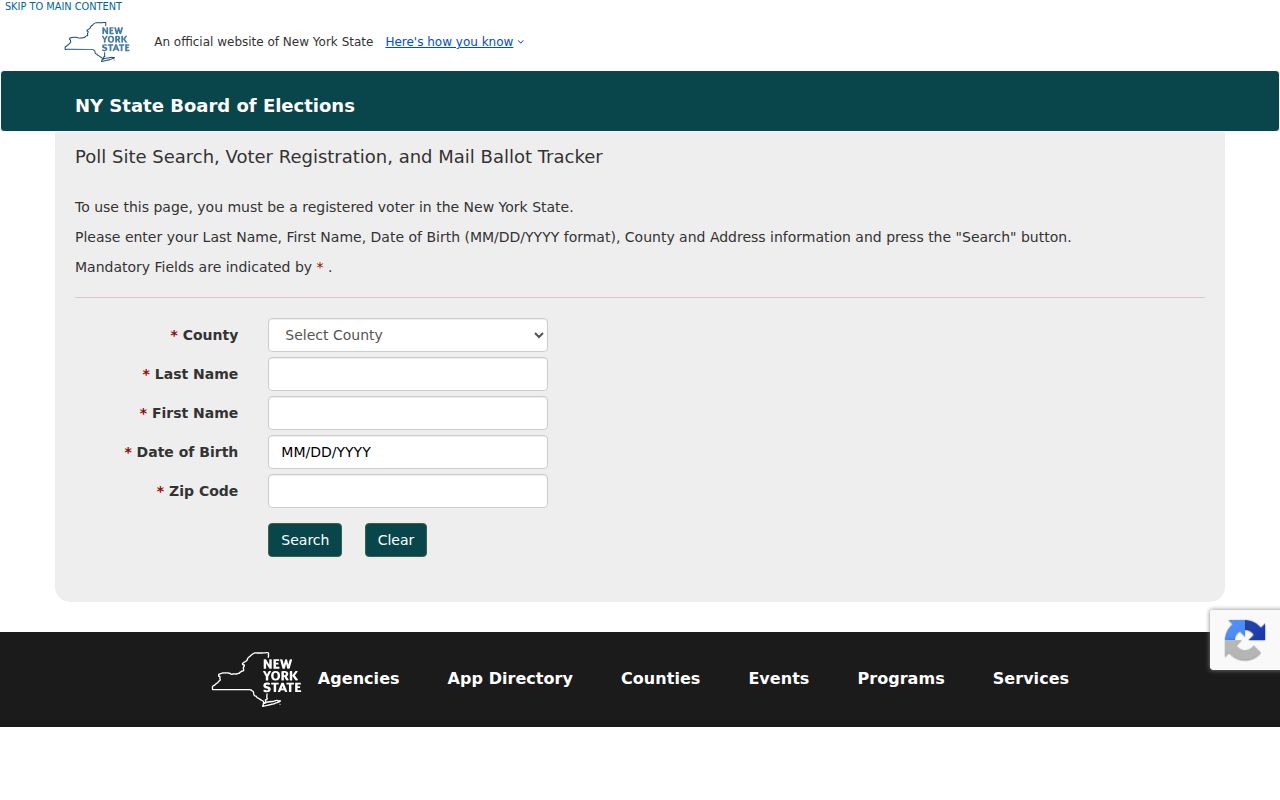
The form’s county and address matching controls reinforce why a name alone is not a reliable identification method.
The New York online registration form has separate qualification, identity, residence, mailing-address, prior-registration, and affidavit steps.
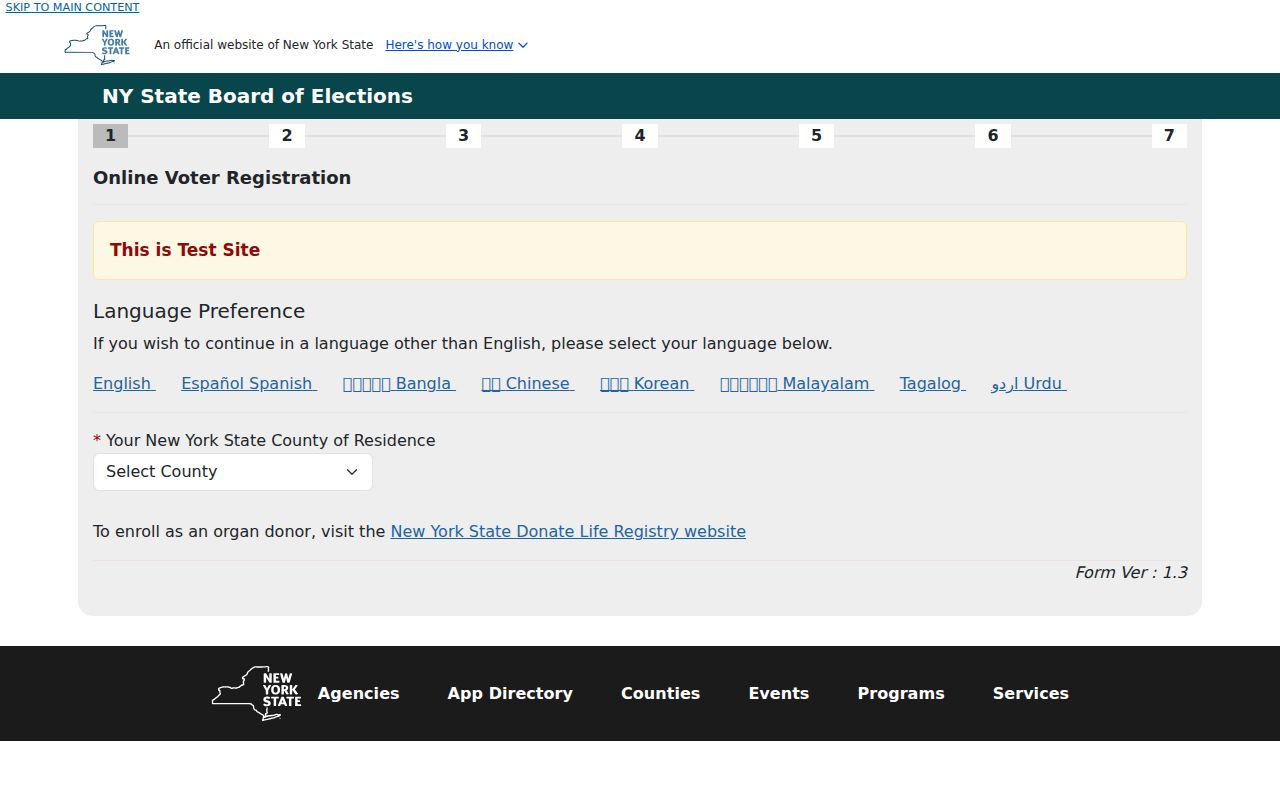
Registration inputs are collected for an elections process, not for creating a public neighborhood directory.
Riverhead Current Directory Sources
Current Riverhead resident directories are really a group of record systems with different scopes. A tax search is keyed to property. A deed index is keyed to parties and instruments. The voter tool is a protected, voter-facing matching service. Courts, licenses, and state systems each have a different purpose and restriction. Choose the source that can confirm the question, then note what it cannot establish. For a one-person method that compares multiple official records, use the Riverhead resident lookup workflow.
| Riverhead source | What it can confirm | Custodian | Access route |
|---|---|---|---|
| Town tax and final rolls | Property location, class, assessment, and dated tax context | Town Assessor / tax offices | Tax portal and roll archive |
| County Clerk instruments | Grantor, grantee, recorded date, and legal-description trail | Suffolk County Clerk | Kiosk, copy route, or historic records room |
| New York voter lookup | A voter’s own registration, poll-site, or ballot status | State and county elections offices | Official match form and statutory request routes |
| Library newspapers and directories | Historic names, notices, occupations, or intersections | Riverhead Free Library | Library databases, appointment, and local collections |
| Court, vital, and license records | Only the specific event, case, or credential allowed by that system | Relevant court or New York agency | Portal, clerk, or qualified-request route |
Official sources are usually more limited than commercial directory categories, but their custodian, field labels, coverage, and fallback path are visible. A commercial result should never replace an official document, clerk, or library source. The Riverhead residents directory works best as a way to select and compare authoritative routes, rather than as a database that makes one broad claim about a person.
Note: A record role such as owner, court party, voter, licensee, or historic directory entry is evidence of that role, not a blanket statement of residence.
Riverhead Court and Vital Paths
Court and vital records are not interchangeable name-search tools. NYSCEF supports case identifier, name, tax-cert or SCAR block-and-lot, and new-cases-by-court-and-date modes, with optional county, case-type, and date narrowing. eCourts has separate systems and result limits. Riverhead Town Court does not have a located official public party-name search, so the clerk route is the honest fallback. The Suffolk County Clerk also has a Court Minutes search with its own index, plaintiff, and defendant fields.
The Town Clerk handles Riverhead-issued marriage records and municipal birth and death certificates subject to applicant and identification rules. Its marriage form states that licenses obtained in the Town run from 1881 to the present. For statewide, outside-New-York-City historical research, the New York State Department of Health and State Archives provide different index and certificate paths. Modern access depends on relationship, date, direct-line, proof, or court rules. An index is a lead, not a certificate.
The NYSCEF case-search help shows the available search modes and narrowing controls.
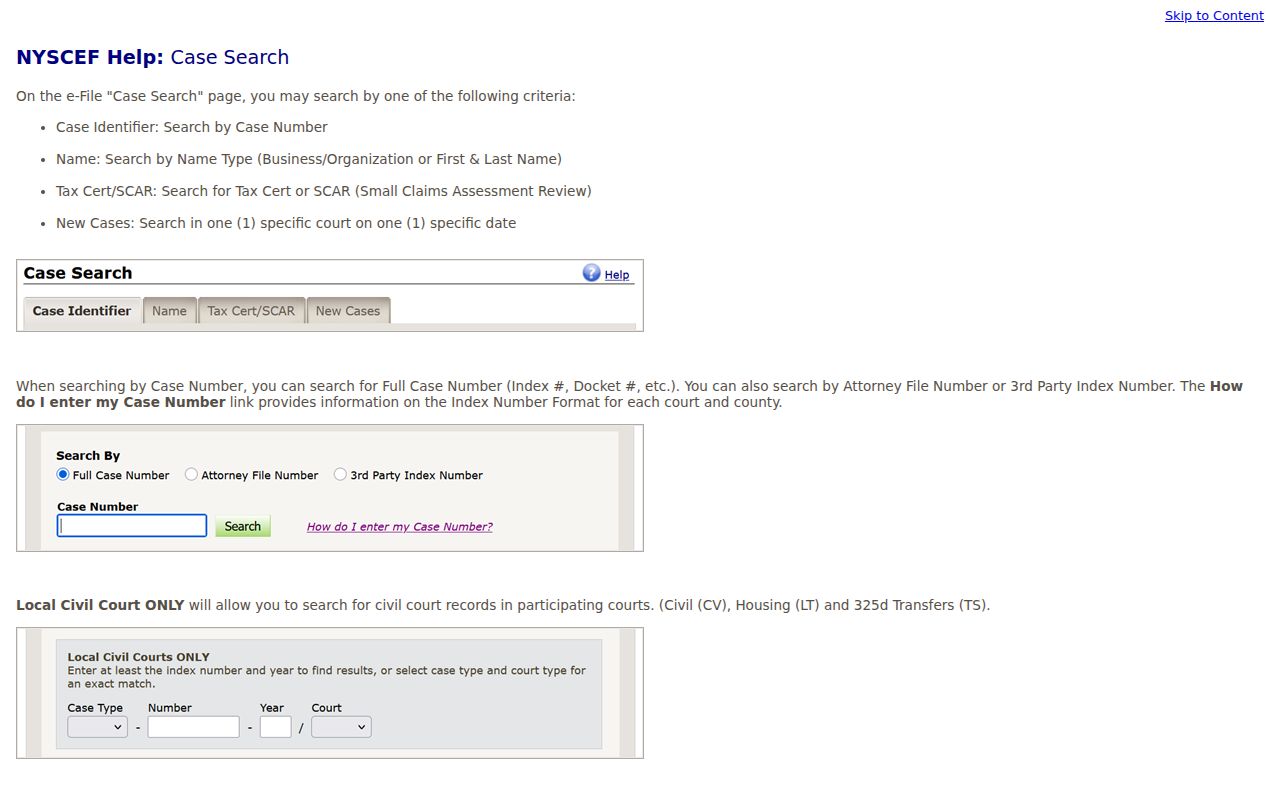
Use the case identifier, party role, county, and status to distinguish court records from an unrelated name match.
For historical vital-record research, consult the New York State genealogy route for its eligibility periods and application instructions.
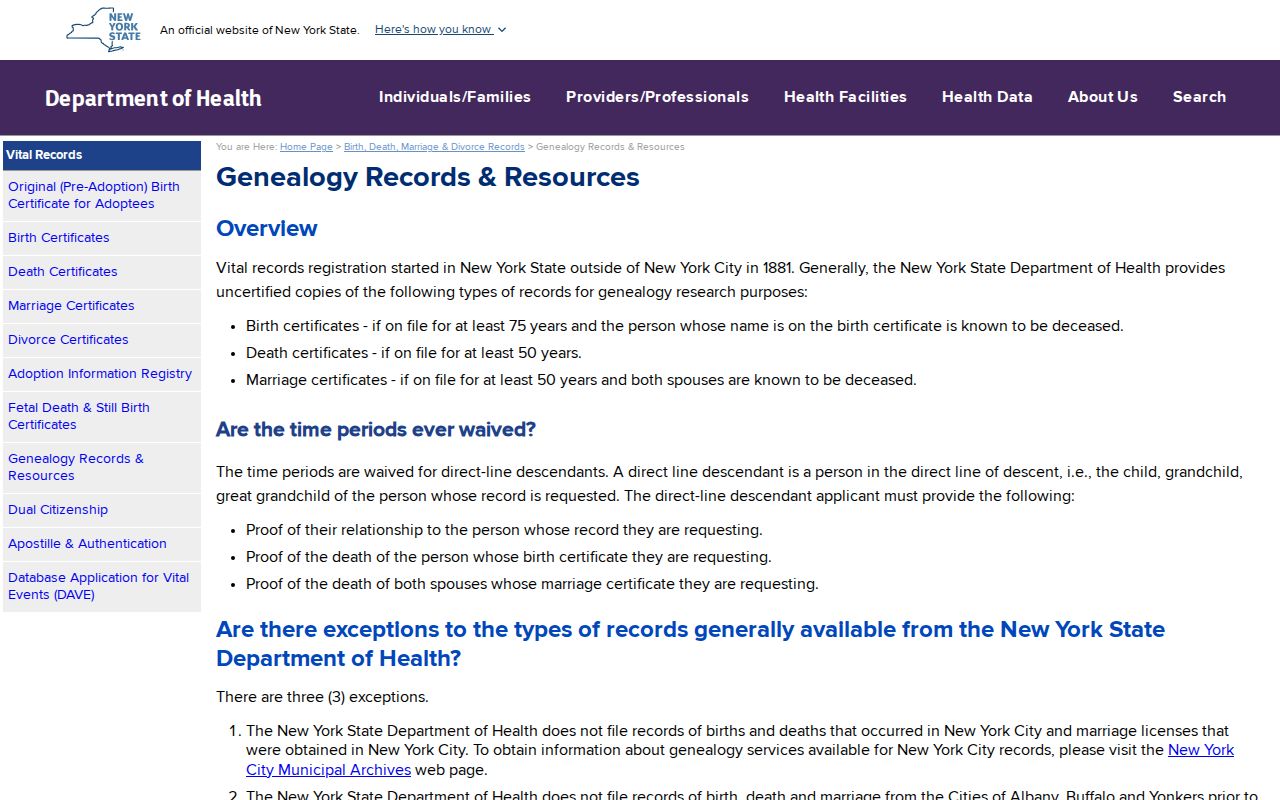
That route helps a family-history search stay within the record’s legal access conditions and documented coverage period.
Riverhead Historical Directory Shelf
Riverhead’s strongest inspected historical directory is Curtin’s 1868/69 Directory. It organizes entries as surname and given name, occupation, and address or intersection. The entry may note a business place, home location, civic role, widow wording, or landmark. It often gives an intersection instead of a modern street number. The Suffolk holdings finding aid also identifies Boyd’s 1864/65 Long Island Directory, an 1889 business directory, Lain’s 1889–1897 titles, a 1895 directory, and Olek’s 1924/25 Nassau/Suffolk directory. Those are leads to confirm with the holding institution.
The Riverhead Free Library’s Perkins Local History Collection offers free one-hour genealogy appointments on Tuesdays and Wednesdays. Its online resources point to newspaper and historical material. The Suffolk County Historical Society is another local fallback for directories, family files, maps, and newspapers; its research library hours are Wednesday through Friday, 12:30 to 4:30, with Saturday by appointment. The complete directory interpretation and collection route is in the Riverhead city directory section.
Note: No confirmed Riverhead reverse-directory title or standalone public obituary index was found, so ask the library or Historical Society about current holdings.
Riverhead Hamlet Boundary Checks
Records need a geography check before they become a Riverhead residents directory result. The Town’s comprehensive-plan material names nine hamlet areas, including Aquebogue, Baiting Hollow, Calverton, Jamesport and South Jamesport, Laurel, Manorville, Northville, Riverhead, and Wading River. It also says those hamlet areas do not have legally defined boundaries. Postal cities, school districts, fire districts, Census lines, and municipal boundaries can differ. Laurel, Manorville, and Wading River each cross another Town context.
Use a ZIP code for postal delivery, then confirm the parcel through Town GIS, a County Clerk tax-map lookup, or RPTSA. The Town’s newer GIS material describes parcel, zoning, and infrastructure layers, although the research did not capture a stable complete list of popup fields or export controls. A map layer can orient a search; it is not a substitute for a deed’s legal description or the actual record custodian.
Riverhead geography check. A Riverhead mailing label does not prove that a parcel is in the Town of Riverhead. Confirm the Town, parcel, and DSBL before relying on a record.
Riverhead FOIL Request Route
When a record is not online, New York’s Freedom of Information Law, Public Officers Law Article 6, sections 84–90, supplies an access route for reasonably described agency records. A request should name the agency or department, record type, address or parcel, date range, and preferred format. The Town’s FOIL instructions explain that departments have records access officers and that the Town Clerk routes permits, certificates of occupancy, and surveys. FOIL asks for existing records. It does not require an office to create a compilation or answer an open-ended research question.
The State’s FOIL guidance says an agency generally must grant, deny, or acknowledge a request within five business days, then give an approximate determination date when more time is needed. A denial or constructive denial can be appealed within 30 days. Some material can be redacted or withheld. Use the County Clerk’s specific kiosk, historical records room, or copy procedures for a recorded instrument rather than treating a FOIL request as a replacement for that custodial route.
Riverhead Privacy Protections
A Riverhead residents directory has real public-record boundaries. The New York Address Confidentiality Program provides eligible participants with a substitute mailing address and protects the actual physical address. Confidential voter registration, sealed or restricted court files, and vital-record access rules can also limit what a search displays. A blank result may be a protection or a coverage gap, not evidence that a person is absent.
Use personal record research lawfully and minimize what you retain or share. Do not treat a name match as identity proof, and do not use a record trail to stalk, harass, threaten, impersonate, or expose a protected person. The Address Confidentiality Program is the official protection route for eligible people. Custodian records should be checked again before a reader relies on them.
Riverhead Records Changes
Several Riverhead research details are time-sensitive. The Town describes an expanding public GIS portal, and its comprehensive-plan page lists a 2024 adopted update. Suffolk County’s current deed-scam warning directs readers to the Clerk’s official copy route instead of high-priced solicitations. The Board of Elections says 2026 county voting uses ExpressVote XL machines and lists 28 early-voting locations. These items are operational context, not permanent promises, so check the linked office before acting.
Riverhead also has a local records story that helps explain why a careful trail matters. The Town Historian describes a 1909 kerosene accident that nearly destroyed official records. The County’s Historic Documents Library still relies on paper books, maps, and staff guidance for older material. When a record is missing, retain the gap in the research notes instead of replacing it with a guess. That habit makes the Riverhead residents directory more useful for a current search and for family history.